Fires in offices do not look like film scenes. They are untidy, quickly, and puzzling. Individuals think twice, alarms misfire, doors jam, and the first mins are loaded with sound and half-heard instructions. An excellent emergency control organisation, with qualified wardens led by a qualified chief warden, transforms that confusion into a controlled, timely emptying. The legislation expects that level of readiness. Much more importantly, your people count on it.
This overview outlines the lawful and functional demands for fire wardens, the training that underpins skills, and the practices that make emergency situation action second nature. It mixes regulatory expectations with field fact, the things you only appreciate after many drills and a couple of actual incidents.
Legal obligations and what they suggest in practice
Across usual regulation territories, work environment health and wellness regulations creates a main obligation for employers to give a safe place of work. Embedded because duty is the need to plan for emergency situations, consisting of fire. In Australia, for example, Job Health and wellness laws need emergency strategies and proficient people to implement them. AS 3745 Preparation for emergencies in facilities is the current criterion for emergency control organisations, and its principles apply generally even where the basic itself is not mandated. Other countries make use of various language, but the core assumptions line up.
The essentials correspond. You have to perform a danger analysis that considers your individuals, your structure or site, your procedures, and direct fire scenarios. You have to make an emergency plan that includes duties, duties, interaction courses, and discharge procedures. And you need to select, train, and support an emergency control organisation that can perform the strategy under stress. Legislation seldom dictate every information, so regulatory authorities measure you against reasonableness and your very own risk profile. A tiny single-storey office with 20 personnel has various fire warden requirements than a 24/7 stockroom with rotating changes and constant contractors.
Documentation issues. If an occurrence takes place, investigators will certainly request for the emergency plan, training records, pierce reports, warden rosters, and upkeep logs for alarm systems and evacuation systems. Good records show the organisation took its obligation seriously, not as a paper exercise.
The emergency situation control organisation at a glance
The emergency control organisation, or ECO, is the group that guides individuals during an emergency situation. In AS 3745 terms, it includes the chief warden, deputy chief warden, interactions police officer, area wardens, and wardens. The precise structure ranges to the site. On a little flooring, one area warden with a deputy may be adequate. In a multi-building school, each building or zone needs its own ECO, often with common radio internet and a central case control point.
Titles vary by business or country, however the functions are secure. The chief warden coordinates, prioritises, communicates with emergency situation solutions, and decides when to leave. Location wardens sweep their locations, manage neighborhood threats like separating equipment, and report standing. Wardens move individuals, knock on doors, aid those who require help, and maintain order in staircases and at setting up areas. The interactions policeman runs radios or the emergency intercom system, logs events, and relays updates.
A refined however crucial point: wardens are not firemens. Their job is to secure life, not residential property. They may use an extinguisher to stop a small incipient fire if trained and safe to do so, however they do not carry out indoor firefighting. That border maintains people from obtaining hurt.
Training that constructs capacity: PUA systems and beyond
Australia's public safety training framework gives 2 relevant devices that map neatly to ECO roles. PUAER005 Run as part of an emergency control organisation outfits wardens and location wardens with core abilities: alarm kinds and meanings, sweep and search strategies, danger identification, aiding individuals with handicap, and utilizing portable devices when risk-free. A puafer005 course is frequently the baseline for anybody using a warden hat.
For those that lead, PUAER006 Lead an emergency situation control organisation concentrates on decision-making, interactions, command visibility, and liaison with emergency solutions. A puafer006 course prepares primary wardens and deputies to run the event, apply the emergency situation plan under real problems, and adapt when plans meet truth. In active facilities, both systems appear in the training matrix, with puafer005 operate as part of an emergency control organisation appointed widely and puafer006 lead an emergency control organisation targeted to leadership roles.
Whether you utilize these specific devices or a comparable structure, the material needs to really feel useful. In great programs, you exercise on your website, not a common classroom map. You run through a blocked departure situation, an endangered stairwell, a power outage during discharge, and a dud that calls for an orderly stand-down. You listen to your building's tones and attempt the general public address system. You fulfill the fire indicator panel, see just how to isolate a plant area, and review the area of hydrants, tube reels, and extinguishers. That is the degree of detail a fire warden course have to hit to be worth your time.
A couple of functional information different sub-par training from strong warden training. First, tempo and sound. Students ought to experience raised voices, garbled radio website traffic, and time pressure. Second, obscurity. Not every situation is apparent. An ECO should be comfortable devoting to activity with incomplete info. Third, rep. Abilities stick when revisited. Excellent programs require refresher course sessions, usually every twelve month, with brief tool kit talks or micro-drills in between. In higher risk settings, six-month refreshers are common.
How many wardens do you need?
Rules of thumb exist, yet you should begin with your danger profile. Common method for low-risk offices is one warden for 20 to 30 owners per floor, with an area warden responsible for each flooring or zone. High-traffic locations like functions or snack bars benefit from a dedicated warden that knows the flow of site visitors. In storage facilities, you may need one warden for each aisle bank or work cell. In health care or aged treatment, the ratio increases since aided emptying takes longer and calls for coordination.
Shifts make complex planning. If you operate across 3 changes, your warden numbers have to hold up at 2:00 a.m., not just throughout the day. Casual or contractor-heavy offices require added insurance coverage because short-term workers often miss out on induction briefings. If your website has multiple lessees, you will certainly require a building-level ECO and occupant ECOs that speak with each various other. In mixed-use buildings, the chief warden may be appointed by the structure manager, with renters offering wardens for their areas. Clear borders and shared drill schedules come to be essential.
Hat colours, vests, and other identifiers
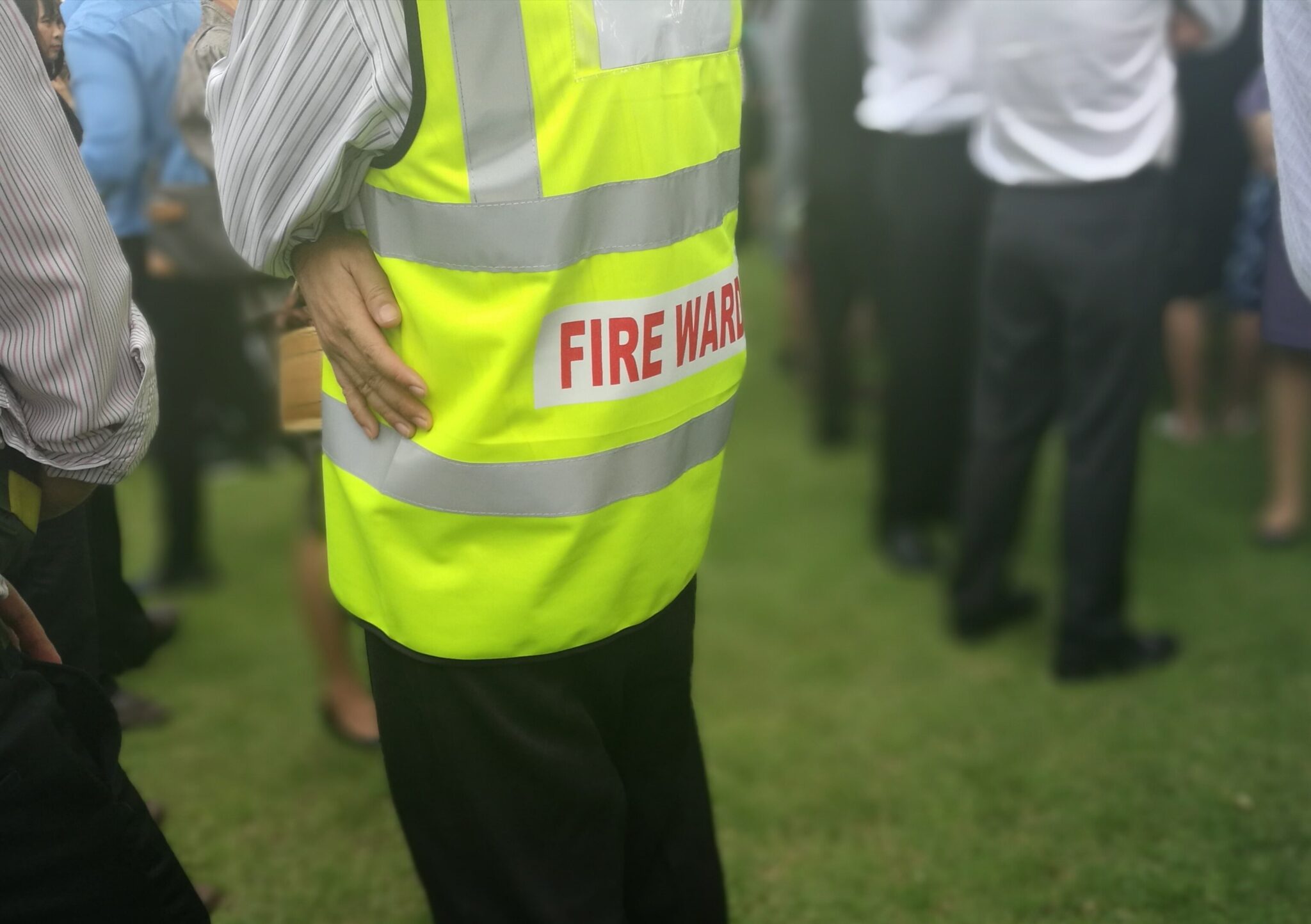
During an evacuation, presence and clearness matter. Lots of organisations utilize coloured hard hats or vests to signify duties. The chief warden commonly wears white. A replacement chief warden may likewise use white or a distinct pen like white with a stripe, relying on website convention. Location wardens frequently wear yellow, while communications officers or first aid -responders might make use of various other colours. When asked what colour helmet does a chief warden wear, white continues to be one of the most extensively identified response in Australia and in many company criteria. If your industry defaults to soft caps or vests rather than helmets, keep the very same colour logic.
Fire warden hat colour is not design, it is function. In a great smoky hallway or crowded setting up area, colour flags management and lowers confusion. The method is consistency. Release a simple aesthetic overview in your emergency situation plan and show it near muster points so new starters and site visitors understand who to adhere to when stress and anxiety spikes.
Chief warden duties and decision points
The chief warden's job is component band conductor, component air website traffic controller. When the alarm system appears, they validate the alarm system source and kind from the fire panel or checking company, initiate public address guidelines, and activate or delay discharge based on the strategy. They assign or confirm the communications officer, button to the ECO radio network, and request location condition updates. Their interest toggles in between the large image and the following two minutes.
Decisions commonly arrive quickly. Do you leave the entire building or a partial area? Do you hold individuals in position for back stairway mess while sending out an additional floor out initially? Do you reroute to an alternate setting up location due to wind instructions or a second hazard like a gas spill? Judgment boosts with exposure. That is why chief warden training ought to include circumstance job that really feels uncomfortable. A chief warden course with only slides and no vibrant role-play misses out on the point.
It aids to establish decision design templates. For example, if smoke is found on a floor, evacuate the afflicted floor, the floor above, and the flooring listed below, while holding other floorings till standing gets rid of. If the alarm system is triggered by a plant space heat detector however no smoke or fire is observed, place location wardens on standby while an educated person checks from a risk-free range, after that intensify if any type of uncertainty continues to be. Layouts are not manuscripts. They provide you a place to begin when adrenaline is high.
Chief warden obligations do not end at the evacuation. They must account for individuals at the setting up area, verify if any individual is still inside, brief participating in fire teams, and run a regulated re-entry when it is risk-free. After the occasion, they lead the debrief, capture lessons, and push enhancements right into the emergency plan.
What wardens actually do throughout an alarm
Wardens are the face of calmness. When the tone sounds and the message starts, they move. They sweep their area from the back back towards the leave, inspecting closed areas, restrooms, cabinets that might conceal a well-meaning individual collecting valuables, and high-noise areas like print areas where alarm systems go away under hum. They guide individuals to the nearby risk-free exit, not the one they utilized in the morning. They look for any challenges, remove what they can securely move, and call out hazards that require workarounds.
On the stairs, wardens manage rate and spacing. Discharges delay not from range but rubbing points. A well-placed warden every couple of floorings keeps the stream moving. They inhibit bag access, elevator use, and backtracking. At the assembly area, wardens direct people to preassigned areas and begin roll phone calls utilizing printed lists, applications, or a combination. Names matter here. In large websites, a single name missed can postpone re-entry by 20 minutes while staffs sweep floors unnecessarily.
Wardens additionally watch for those that need help. An individual that can mosey might still require a friend. Movement tools, solution animals, listening to disabilities, stress and anxiety, pregnancy, and temporary injuries produce genuine requirements that vary by day. You just find them if wardens know their individuals and ask ahead of time. Lots of sites utilize individual emergency situation discharge prepare for specific individuals, connected to the ECO's muster sheets.
The small print on extinguishers and "firemen" instincts
Portable extinguishers work devices in qualified hands for small, early-stage fires. Yet they tempt individuals right into heroics. Training has to set a clear bar. If the fire is bigger than a trash can, if smoke is thick or black, if you need to bend or reach right into a room, or if you're alone, do not attempt to eliminate it. Draw the alarm, shut the door to contain, and move people away. In drill debriefs, I ask wardens to describe what they smell, really feel, and see prior to deciding to try an extinguish. If our self-confidence is under 80 percent and the leave is not kept behind them, it is a no.
On the opposite, I've seen little electrical fires in server areas stopped within 15 seconds due to the fact that a trained warden got hold of a carbon dioxide extinguisher, maintained the exit at their back, and understood when to quit. The distinction is skill and the self-control to step away as quickly as conditions change.
Designing a strategy that people can in fact follow
Emergency plans fail when they are composed as compliance documents rather than guidebook. Beginning with clear flooring layouts that reveal leaves, stairways, fire devices, and refuge points. Use ordinary language and short, active sentences in action actions. Map neighborhood hazards. If you have a chemical store, note it. If your stairwell tightens on degree 6, note that and plan to startle floor releases.
Include interactions protocols that show your genuine tools. If you make use of radios, standardise phone call indicators and short message styles. If your website depends on cellphones, identify the back-up when coverage decreases. Alarm systems, systems, and warden radios need to be examined together. An alarm that hushes radio traffic can delay an evacuation. News ought to be scripted for most likely situations yet flexible. People's minds acquire tone and self-confidence as long as words.


Set 2 assembly areas. Weather condition, road closures, or a secondary incident can make a primary muster area harmful. In a city school, I have actually utilized a nearby multi-level parking area as a protected muster factor, with marshals at the entry ramp to stay clear of web traffic. In a port center, wind and smoke direction drove the option. People bear in mind if you clarify the why throughout drills.
Drills that relocate beyond "tick the box"
The difference in between a drill that instructs and one that loses an hour is intending. If you can, coordinate with the building manager so wardens can run the fire panel under supervision, not just see. Rotate scenarios throughout the year: a blocked stairwell on the north side, a confined fire in the cooking area, a partial evacuation, an after-hours alarm with only one warden on site. Add an interactions hiccup so wardens practice verification techniques rather than assumptions.
One detail that matters: time the sweep. Wardens commonly undervalue how much time a thorough check takes. In a six-storey office with 120 people per flooring, a regimented move by two wardens takes 3 to five mins, longer if there are numerous shut rooms. That timing notifies your decision to cause discharge early for top floors.
Drills should consist of visitors and professionals. Function should know exactly how to make up them, either through a sign-in app that feeds muster listings puafer006 lead an emergency control organisation or a simple clipboard tally. If your procedure for visitors is hands-on, your drill has to examine it. Deal with the post-drill debrief like an appropriate case evaluation. What went well, what needs to transform, and who has the change with a due day. A two-line e-mail that claims "All good" is a missed out on opportunity.
Integrating emergency treatment and security with the ECO
Most emergency occasions are mixed issues. A small fire might trigger a medical issue or a group movement threat at the exit gates. Your ECO will function much better if emergency treatment responders and security groups are tied in. In some organisations the interactions officer sits with safety at the control area, viewing CCTV to confirm staircase problems and crowding. In others, an emergency treatment lead stages at the setting up location to triage any person who arrives troubled or injured.
Brief these functions right into the strategy. During a drill, assign them jobs: protect the packing dock roller door if evacuation goes through it, meet the fire service at the road entry with a floor plan, or manage automobile circulation at the parking area leave. Even little combinations like a common radio channel for emergency usage make a concrete difference.
Fire warden training needs and refreshers
Beyond preliminary puafer005 and puafer006 training, you need to order refresher courses in your training matrix. Twelve months is common for wardens and chief wardens. Some insurance providers and building managers like six months for high occupancy or high-risk centers. New buildings, modifications in fit-out, or the arrival of a new tenant should cause an acting update. If your labor force turns over swiftly or depends on casuals, aim for brief induction modules that cover evac courses, tone significances, and that chief emergency warden to follow. Keep it under 10 minutes or it will be skipped.
Choose providers that analyze on skills, not participation. Ask how they imitate choice stress. Good instructors personalize web content to your floor plans and will run onsite workouts. If your site is remote, think about a combined method: online pre-work, adhered to by an in-person sensible where wardens run through sweeps, use radios, and operate the panel. A fire warden course that quits at concept isn't enough. Chief fire warden training must include occurrence logs, public address technique, and liaison with emergency services.
Common mistakes and just how to prevent them
Even well-run organisations trip over a couple of predictable problems. The first is over-reliance on a solitary solid chief warden. If that person is on leave, efficiency drops. Develop deepness. Deputies need actual technique, not just a title. The 2nd is stale plans. Workplace improvements and layout fine-tunes modification circulation quickly. Make it a practice to walk the floors quarterly. The third is narrow drills. If your drills constantly happen at 10:00 a.m. on a Wednesday, you are checking only one pattern. Attempt an early-morning drill with half the common team, or a late-afternoon drill when individuals are in meetings or hurrying to leave.
Another pitfall is unclear setting up procedures. When you ask a group if everybody is accounted for, someone will certainly state yes based on a feeling. Change that with a technique. Roll calls can be old-school published checklists, however they should be up to day. Digital systems linked to accessibility control can assist, though they must handle site visitors and people who tailgate. The most basic trusted action is to assign each warden a named group or area to report on, and the communications police officer collates the reports by floor.
Finally, deal with false alarms as training possibilities. Every unexpected emptying subjects actual gaps. Debrief, readjust, and document activities. If you uncover a duplicated device creating journeys, fix it. If a specific stairwell jams due to the fact that a door better is too solid, readjust it.
Selecting and supporting the right people
Not everyone wants to be a warden, which's penalty. Look for people that remain tranquil under stress and can predict their voice. Impact issues greater than rank. A revered assistant commonly makes a far better location warden than a senior manager because they understand names, rooms, and how the day actually runs. Change supervisors are all-natural candidates in functional websites. For primary wardens, select individuals that can choose with incomplete info and then connect them clearly. If they hesitate commonly in daily job, they will battle throughout an incident.
Support your wardens with time and tools. Block their calendars for training and drills. Supply radios that work in stairwells. Supply extra batteries. Offer vests or hats in the ideal colours and maintain them available, not secured a cabinet 2 hallways away. If wardens perform added obligations, acknowledge it in performance testimonials or stipends. Volunteers are charitable, however duty without assistance causes attrition.
How this views the ground: a short story
At a warehouse I collaborated with, the very first evacuation under a new plan took eight minutes much longer than we anticipated. The offender wasn't stairs or distance. It was forklifts and pallet jacks deserted across egress paths when the alarm sounded. No malignance, just muscular tissue memory. We tweaked the strategy in a straightforward method. Throughout induction, we instructed drivers a one-line direction: on alarm, park in marked bays, forks down, power off, after that go. We marked bays near exits with intense paint. In the following drill, aisles remained clear and the building cleared in simply under six mins, a cut of more than 40 percent. Nothing fancy, just a detail grounded in just how the work really happens.
Where PUA systems fit into a broader security system
The puafer005 operate as part of an emergency control organisation and puafer006 lead an emergency control organisation units anchor competency for wardens and primary wardens. But they sit alongside other components: emergency treatment training, confined room and hot job licenses, dangerous chemical administration, and service provider induction. When these programs line up, people hear consistent messages. As an example, your hot job permit procedure should consist of a fire watch and the specific directions for seeming an alarm system and informing the chief warden. Your specialist induction need to cover the exact same discharge tones and assembly location names utilized in warden training.
If you manage a portfolio of sites, standardise what you can without overlooking regional truth. The chief warden hat colour could be white across all websites, and the warden vests yellow, however stairway naming or assembly area labels will vary. Urge cross-site drills for elderly chief wardens. They learn promptly by observing various buildings and tactics.
Putting it together: a practical quick-start
- Map your existing state: who are your wardens by shift and location, what training have they finished, when were drills last performed, and what did the debriefs say. Align roles and training: routine puafer005 for wardens and area wardens, and puafer006 for principal and deputy chief wardens; established refresher courses at year or much shorter for greater risk. Tighten the plan: confirm assembly areas, radio procedures, and choice design templates; update floor diagrams and message them. Run a practical drill: pick a scenario that checks a powerlessness, time the move, and capture quantitative notes such as staircase dwell times. Close the loop: deal with rubbing factors, record updates, and connect adjustments throughout changes and tenants.
That simple series, duplicated and matured, constructs an ECO that can deal with more than a book alarm.
Final checks and judgment calls
Fire warden requirements in the work environment are not nearly numbers and hats. They have to do with exactly how rapid human beings can collect info, make decisions, and relocate groups without panic. Great systems expect the messy components. They prepare for the lone night-shift custodian that ends up being the emergency warden by default. They prepare for the visitor who doesn't talk the neighborhood language. They prepare for the alarm that trips throughout a VIP occasion when people stand up to leaving. They prepare for smoke that gives off burnt salute yet conceals a falling short ballast in a light suitable 2 rooms away.
If you are responsible for this system, walk your site. Look at leave hardware. Listen to the alarm tones. Attempt the with the doors open and the air handling systems running. Ask three people on the floor to indicate the nearby exit, then ask them to name the assembly area. Those small checks reveal where to focus your following drill or tool kit talk.
Strong fire warden programs incorporate lawful compliance with lived technique. Train individuals well, give them decisive management, mark functions plainly, and rehearse under problems that really feel real. Do that, and when the day shows up that the alarm is not a drill, your ECO will turn noise into motion and unpredictability into action.
Take your leadership in workplace safety to the next level with the nationally recognised PUAFER006 Chief Warden Training. Designed for Chief and Deputy Fire Wardens, this face-to-face 3-hour course teaches critical skills: coordinating evacuations, leading a warden team, making decisions under pressure, and liaising with emergency services. Course cost is generally AUD $130 per person for public sessions. Held in multiple locations including Brisbane CBD (Queen Street), North Hobart, Adelaide, and more across Queensland such as Gold Coast, Sunshine Coast, Toowoomba, Cairns, Ipswich, Logan, Chermside, etc.
If you’ve been appointed as a Chief or Deputy Fire Warden at your workplace, the PUAFER006 – Chief Warden Training is designed to give you the confidence and skills to take charge when it matters most. This nationally accredited course goes beyond the basics of emergency response, teaching you how to coordinate evacuations, lead and direct your warden team, make quick decisions under pressure, and effectively communicate with emergency services. Delivered face-to-face in just 3 hours, the training is practical, engaging, and focused on real-world workplace scenarios. You’ll walk away knowing exactly what to do when an emergency unfolds—and you’ll receive your certificate the same day you complete the course. With training available across Australia—including Brisbane CBD (Queen Street), North Hobart, Adelaide, Gold Coast, Sunshine Coast, Toowoomba, Cairns, Ipswich, Logan, Chermside and more—it’s easy to find a location near you. At just $130 per person, this course is an affordable way to make sure your workplace is compliant with safety requirements while also giving you peace of mind that you can step up and lead when it counts.